Brian Otieno
★★★★★Bought this for our podcast after fighting room noise for months. It just rejects everything that is not right in front of it. Needed a gain booster with my interface, as the shop warned.
5 September 2026
Microphones
★★★★★ 5.0
✅ In stock — 10 available
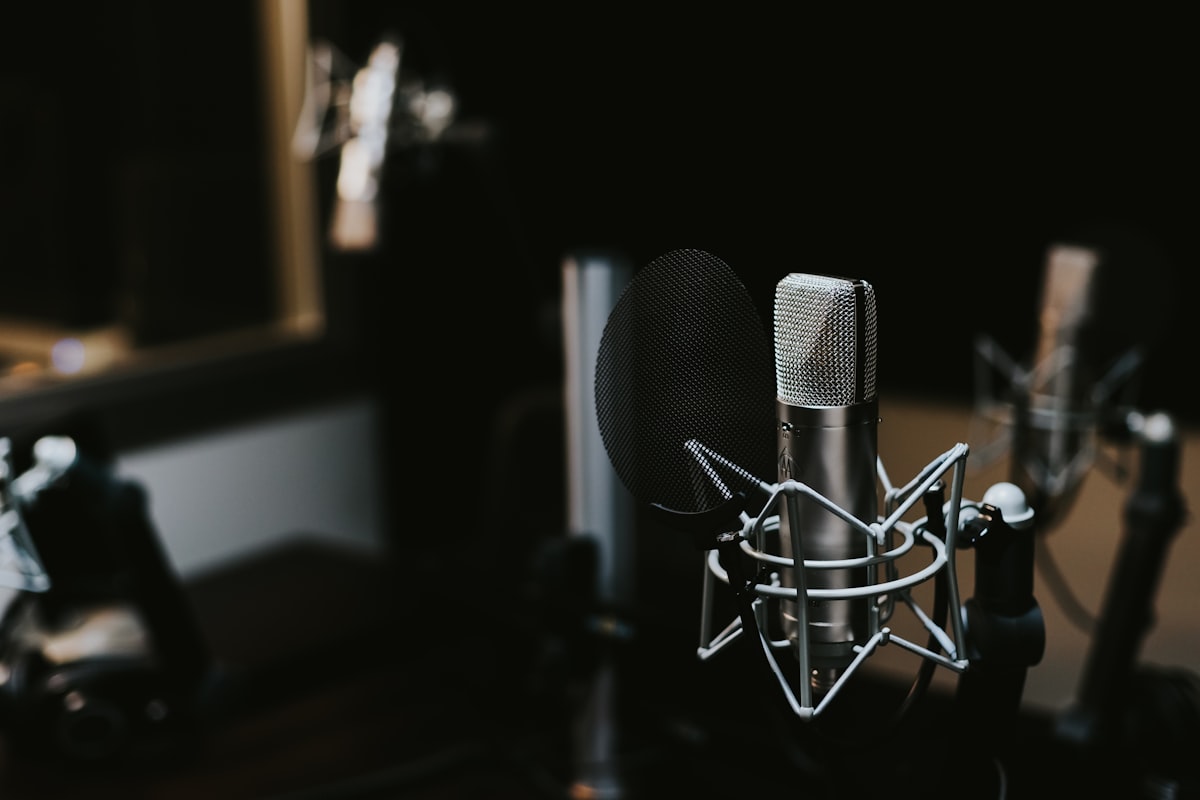
The Shure SM7B is the microphone in front of most broadcast voices you have ever heard, and it earned that position by being forgiving. It rejects room sound, it handles loud sources without complaint, and it flatters the low and middle of the human voice in a way that makes ordinary rooms sound like studios. WHY BROADCASTERS AND PODCASTERS CHOOSE IT The SM7B is a cardioid dynamic microphone with an unusually well-controlled polar pattern and heavy internal shielding. Dynamic microphones are less sensitive than condensers, which sounds like a disadvantage until you record in a normal room. Lower sensitivity means less of the room, less of the neighbour's generator, less of the fan, less of the traffic outside. In an untreated space, that is the difference between a usable recording and one that needs hours of noise reduction. The internal air suspension shock isolation removes desk thumps and stand vibration. The detachable pop filter handles plosives. The electromagnetic shielding was designed originally to reject hum from computer monitors, and it still rejects interference from the phones, laptops and lighting that surround every modern desk. KEY SPECIFICATIONS Type: cardioid dynamic microphone Frequency response: 50 Hz to 20 kHz Polar pattern: cardioid, uniform across frequency Output impedance: 150 ohms Sensitivity: approximately minus 59 dBV per pascal, roughly 1.12 mV per pascal Response switches: bass roll-off and presence boost Shielding: advanced electromagnetic shielding against computer and monitor hum Isolation: internal air suspension shock isolation Included: detachable windscreen, close-talk windscreen, integrated swivel mount Connector: XLR, balanced Phantom power: not required and not used THE GAIN QUESTION, ANSWERED HONESTLY This is the single most important thing to understand before buying. The SM7B has low output. It needs roughly 60 dB of clean gain to sit at a healthy recording level, which is more than many budget interfaces can deliver without their preamp noise becoming audible. If you are pairing it with an interface that has strong preamps, such as the Focusrite Scarlett 18i20, or a mixer with good gain like the Allen and Heath ZED-10FX, you will be fine. If your interface is a small two-input unit with modest gain, plan on an inline preamp booster as well. We would rather tell you that now than have you buy a legendary microphone and conclude it is quiet and disappointing. THE TWO SWITCHES ON THE BACK The bass roll-off reduces proximity effect, the bass build-up that occurs when a directional microphone is very close to the source. If your voice sounds boomy at two inches, engage it. The presence boost lifts the upper midrange to add intelligibility and cut through a mix. For spoken word it often adds useful clarity; for singing it depends entirely on the voice. Both switches are on the rear panel and are set with a small screwdriver, so decide before you mount it. WHO THIS IS FOR Podcasters and radio presenters. YouTube and content creators recording in bedrooms and offices. Churches recording sermons. Voice-over artists. Vocalists who want a dynamic microphone that handles loud, close singing without harshness. It is also a superb microphone on guitar amplifiers and on kick drum, where its ability to take high sound pressure levels is an asset. WHAT IT WILL NOT DO It will not give you the airy top end of a large-diaphragm condenser such as the Rode NT1-A. If you are recording acoustic guitar, choir, strings or a delicate vocal in a treated room, a condenser is the better tool. Choose the SM7B for control and rejection; choose a condenser for detail and air. PRACTICAL NOTES Mount it on a sturdy boom arm or a heavy stand. It is a substantial microphone, and a light desktop stand will droop. Work close, roughly a hand's width, and speak across the grille rather than directly into it if plosives are a problem. Use a decent XLR cable. Because the output is low, everything downstream is amplified heavily, including any noise picked up by cheap cable. WARRANTY, DELIVERY AND ADVICE Genuine Shure stock with a 12-month warranty, delivered countrywide and paid on delivery by M-Pesa or cash. Tell us what interface or mixer you are using and we will confirm whether you have enough clean gain before you order.
Read full description ↓Prefer to order by phone?
Talk to a real person — we'll help you pick the right gear.
The Shure SM7B is the microphone in front of most broadcast voices you have ever heard, and it earned that position by being forgiving. It rejects room sound, it handles loud sources without complaint, and it flatters the low and middle of the human voice in a way that makes ordinary rooms sound like studios.
WHY BROADCASTERS AND PODCASTERS CHOOSE IT
The SM7B is a cardioid dynamic microphone with an unusually well-controlled polar pattern and heavy internal shielding. Dynamic microphones are less sensitive than condensers, which sounds like a disadvantage until you record in a normal room. Lower sensitivity means less of the room, less of the neighbour's generator, less of the fan, less of the traffic outside. In an untreated space, that is the difference between a usable recording and one that needs hours of noise reduction.
The internal air suspension shock isolation removes desk thumps and stand vibration. The detachable pop filter handles plosives. The electromagnetic shielding was designed originally to reject hum from computer monitors, and it still rejects interference from the phones, laptops and lighting that surround every modern desk.
KEY SPECIFICATIONS
Type: cardioid dynamic microphone Frequency response: 50 Hz to 20 kHz Polar pattern: cardioid, uniform across frequency Output impedance: 150 ohms Sensitivity: approximately minus 59 dBV per pascal, roughly 1.12 mV per pascal Response switches: bass roll-off and presence boost Shielding: advanced electromagnetic shielding against computer and monitor hum Isolation: internal air suspension shock isolation Included: detachable windscreen, close-talk windscreen, integrated swivel mount Connector: XLR, balanced Phantom power: not required and not used
THE GAIN QUESTION, ANSWERED HONESTLY
This is the single most important thing to understand before buying. The SM7B has low output. It needs roughly 60 dB of clean gain to sit at a healthy recording level, which is more than many budget interfaces can deliver without their preamp noise becoming audible.
If you are pairing it with an interface that has strong preamps, such as the Focusrite Scarlett 18i20, or a mixer with good gain like the Allen and Heath ZED-10FX, you will be fine. If your interface is a small two-input unit with modest gain, plan on an inline preamp booster as well. We would rather tell you that now than have you buy a legendary microphone and conclude it is quiet and disappointing.
THE TWO SWITCHES ON THE BACK
The bass roll-off reduces proximity effect, the bass build-up that occurs when a directional microphone is very close to the source. If your voice sounds boomy at two inches, engage it.
The presence boost lifts the upper midrange to add intelligibility and cut through a mix. For spoken word it often adds useful clarity; for singing it depends entirely on the voice. Both switches are on the rear panel and are set with a small screwdriver, so decide before you mount it.
WHO THIS IS FOR
Podcasters and radio presenters. YouTube and content creators recording in bedrooms and offices. Churches recording sermons. Voice-over artists. Vocalists who want a dynamic microphone that handles loud, close singing without harshness. It is also a superb microphone on guitar amplifiers and on kick drum, where its ability to take high sound pressure levels is an asset.
WHAT IT WILL NOT DO
It will not give you the airy top end of a large-diaphragm condenser such as the Rode NT1-A. If you are recording acoustic guitar, choir, strings or a delicate vocal in a treated room, a condenser is the better tool. Choose the SM7B for control and rejection; choose a condenser for detail and air.
PRACTICAL NOTES
Mount it on a sturdy boom arm or a heavy stand. It is a substantial microphone, and a light desktop stand will droop.
Work close, roughly a hand's width, and speak across the grille rather than directly into it if plosives are a problem.
Use a decent XLR cable. Because the output is low, everything downstream is amplified heavily, including any noise picked up by cheap cable.
WARRANTY, DELIVERY AND ADVICE
Genuine Shure stock with a 12-month warranty, delivered countrywide and paid on delivery by M-Pesa or cash. Tell us what interface or mixer you are using and we will confirm whether you have enough clean gain before you order.
Brian Otieno
★★★★★Bought this for our podcast after fighting room noise for months. It just rejects everything that is not right in front of it. Needed a gain booster with my interface, as the shop warned.
5 September 2026
Faith Wambui
★★★★★Our sermons finally sound like radio. Worth the money.
5 September 2026
Log in to leave a review — it takes 20 seconds.